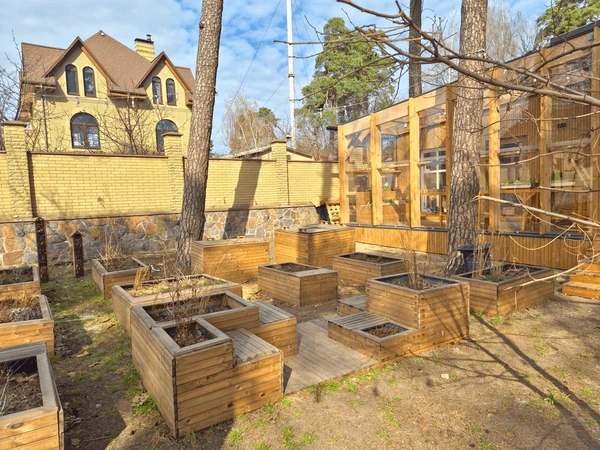
A school habitat project is a purposefully designed ecological zone integrated into the school landscape to support local biodiversity while functioning as a “living classroom”.
Unlike a basic garden or a “wildlife corner,” these projects involve engineering-specific, high-value resources for wildlife, such as ponds, native hedges, and living walls, using original, “solidly made” timber structures.
At Monkey Business Design, we move beyond the “catalogue” approach to build site-specific habitats that work with existing features like slopes and mature trees, ensuring a 20-year lifespan through technical details like galvanised metal feet.
Key Takeaways
- Infrastructure for Wildlife: Habitat projects are not “add-ons”; they are engineered resources, including pond dipping platforms, bird-friendly shingle roofs, and integrated planters.
- Site-First Engineering: We utilise existing features, such as sloped banks for tiered planting or mature trees for hexagonal platforms, to preserve and enhance existing ecosystems.
- Material Durability: For a habitat to be sustainable, it must last; we specify English timber and Larch cladding supported on metal feet to prevent rot in damp, high-biodiversity areas.
- Operational Zoning: Effective design separates high-energy active play from quiet “discovery zones,” preventing the destruction of fragile habitats by older pupils.
- Managed Risk in Nature: All discovery structures are built to BS EN 1176 standards, ensuring that “wild” learning environments are legally compliant and safe.
Defining the School Habitat: Moving Beyond the Tarmac Square
A school habitat isn’t just about planting a few seeds; it’s about building permanent infrastructure that invites wildlife back onto the school site.
Most school grounds in the UK are currently ecological “deserts.” Recent land-use audits reveal that up to 80% of urban school grounds consist of impermeable surfaces like tarmac and concrete, contributing to urban heat islands and zero biodiversity gain.
The urgency of these projects is driven by a stark reality: the 2024 State of Nature report indicates that 1 in 6 species in the UK are now at risk of extinction. School habitats provide critical “stepping stone” corridors.
Furthermore, the National Trust recently confirmed that children’s “outdoor roaming range” has collapsed by 90% since the 1970s.
For many pupils, a school habitat is not just a lesson; it is the only wild space they will enter this week.
What a Professional Habitat Project Can Include
We don’t build with plastic kits; we build with bespoke, timber-framed systems designed for longevity and ecological function.
| Element | Description |
| Aquatic Systems | We engineer ponds and mill stream refurbishments. According to Freshwater Habitats Trust, ponds support more “Priority Species” than any other habitat, yet the UK has lost 50% of its ponds in the last century. Our dipping platforms allow schools to monitor this recovery safely. |
| Timber Discovery Hubs | These are original structures like bird hides and hexagonal tree platforms. They allow for observation without soil compaction, which is vital for protecting root systems. |
| Sustainable Surfacing | We avoid wetpour. We specify sand, bark, and grass with matting to meet BS EN 1177 while ensuring the ground remains porous. |
| Sensory Enhancements | Integrating “autumn colour” acrylics and Cedar shingles teaches children about light and the natural lifecycle of materials. |
Unlocking “Dead Space”: Habitat as a Solution for Difficult Terrain
Bespoke design shines when the site is “difficult.” We don’t level banks; we use them.
- Slopes as Biodiversity Banks: Steep grass banks are ideal for tiered wildflower planting and insect hotels.
- Shady Corridors: North-facing boundaries can be transformed into log-pile habitats. Research from the Royal Entomological Society shows that a single dead-wood “stumpery” can support over 400 species of invertebrates.
- Drainage Strategy: We use swales and “rain gardens” to manage site run-off. This prevents the “mud trap” while creating damp habitats for local fauna.
How to Plan for Specific Local Species
A Monkey Business habitat is built with a “target species” approach. Studies from The Wildlife Trusts show that even small-scale urban habitat improvements can lead to a 25% increase in local pollinator diversity within 24 months.
- Nesting Infrastructure: We design bird boxes and bee bricks directly into the eaves of our timber shelters.
- Pollinator Highways: We select native planting palettes that ensure nectar supply from early spring to late autumn.
- Dead-Wood Ecosystems: We incorporate vertical log features that provide essential resources for invertebrates while acting as “original” sculptural elements.
Engineering for Longevity in Damp Environments
In a habitat zone, standard timber will rot. We engineer for the environment:
- Species Selection: We specify Class 1 and 2 durable timbers like Robinia, Oak, and Sweet Chestnut.
- The “Above-Ground” Rule: Every structural post uses galvanised metal feet. This breaks the rot cycle and ensures a 20-year lifespan.
- Low-Maintenance Management: We provide O&M (Operation and Maintenance) manuals to help site managers balance ecological growth with safety.
How Play and Habitat Co-exist
Nature and play should be intertwined. Studies in The Lancet Planetary Health found that children with access to biodiverse schoolyards had significantly stronger immune systems and lower stress levels after just one month of exposure.
- The Multi-Use Landscape: We design timber trails that wind through meadows.
- Natural Barriers: We use “fedge” (fence-hedge) structures and hazel hurdles to protect delicate areas.
- Interactive Learning: Look-out points and magnifying stations are built directly into our adventure towers.
Procurement and Professional Compliance
- Environmental Auditing: We help schools measure biodiversity gain and select materials with low carbon footprints.
- Safety Sign-off: All structures are built to BS EN 1176. We provide RAMS and an independent RPII inspection at handover.
- Professional Indemnity: With £10m public and product liability insurance, we provide the peace of mind of a seasoned team.
Proof Block: The Redcliffe Children’s Centre Habitat
- The Context: A city-centre space needing to balance high-capacity play with nature access.
- The Solution: We integrated living walls, mud kitchens, and tree platforms linked by bridges to keep the ground level open for planting.
- The Result: A “hands-on” hub where children engage in nature observation and physical adventure 365 days a year.
Habitat as Permanent School Infrastructure
A school habitat project is a long-term investment in your school’s physical infrastructure. By choosing site-specific, “solidly made” timber structures, you create a space that survives the UK climate while supporting wildlife recovery.
Successful habitats require engineering rigour. From rot-resistant timber to BS EN 1176 compliance, every element must be built to last 15–20 years.
A well-designed habitat project bridges the nature gap and reduces your site’s environmental footprint.
Ready to unlock your site’s natural potential?
Don’t settle for a tarmac desert. Let’s build a space that works for your pupils and your local wildlife.
Book a No-Bollocks Site Assessment Today, we’ll walk your grounds and show you exactly what can be built to last.
FAQs
How do you build near ponds without the wood rotting?
We use Class 1 durable timbers and support them on galvanised metal feet.
Can we keep existing trees?
Yes. We build bespoke platforms around trees to preserve their canopy and roots.
Are habitat zones “hazards”?
No. They are “managed risks” designed to meet BS EN 1176 standards.
What is the budget for a small habitat zone?
Small sensory loops typically range from £5k–£12k.
How do we stop pupils from ruining the planting?
We use strategic zoning, boardwalks, and raised platforms to guide movement.