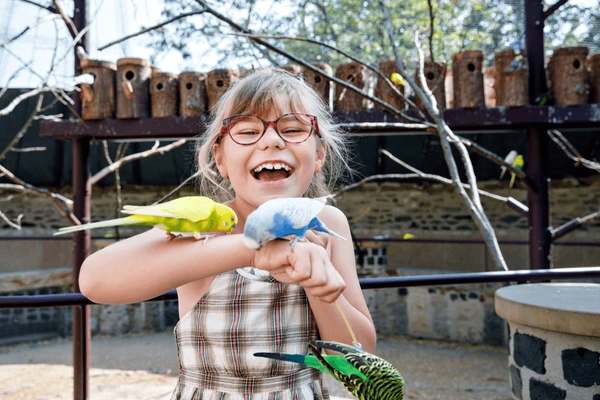
The traditional “wildlife garden” in many UK schools is a missed opportunity. Often, it’s a scruffy-looking corner of the field fenced off with a “Keep Out” sign to protect a few saplings and a bug hotel. To a site manager, it’s a maintenance headache. To a student, it’s a “dead zone” that offers no engagement.
If a space doesn’t work for the kids, it eventually won’t work for the wildlife either, because the school will stop valuing the land.
Key Takeaways
- Children will learn to value and protect what they are allowed to engage with and appreciate.
- Children will enjoy engaging in designing, making, and helping to manage wildlife areas appropriate to their age and abilities.
- Engineering paths and designated hubs to protect sensitive plants and habitats while allowing full-class participation.
- Using fallen timber, logs, boulders, and stout trees to provide physical challenges and seating superior to plastic equipment.
- Encouraging self-directed discovery in “wild” zones to reduce playground boredom and friction and develop curiosity in nature.
- The school may be the primary provider of nature contact for urban pupils.
- Learning the value of “no-dig” gardening and installation to preserve root systems.
- Selection of materials and methods that are durable as well as natural-looking, and ultimately don’t pollute.
Why School Wildlife Areas Fail
School wildlife areas may fail because they are perceived as difficult to supervise, or no staff takes responsibility, and they quickly become neglected. When nature is neglected or “fenced off”, it becomes forgotten and undervalued.
According to the 2024 Children’s People and Nature Survey (Natural England), 91% of children say being in nature makes them happy, yet 29% of them only access nature at school. If that access is restricted by a fence, the educational value is lost.
The goal is to design a space where the “wild” part is the play space.
The Site Manager’s Fear: Managing Trample Risk And Mess
A concern for site teams is that students will destroy the biodiversity. Without managed access, students may trample the entire site. The solution is to engineer durable points of contact, like all-weather boardwalks and raised platforms, informal paths, study and gathering spaces, that minimise damage.
For example…
Consider an area of dead wood with lots of fungi, mosses, and lichens, woodpecker and nuthatch chiseling, and perhaps invertebrate and mammal residents. Students may need supervision to get close and study with minimal repeated disturbance and damage.
A pond edge is one of the most biodiverse microhabitats available to study and is best seen from an overhanging deck.
A fire-pit hub needs to be designed to manage smoke ventilation for people and surrounding vegetation. This allows a class of 30 to sit comfortably in the woods without the logistical chaos of a “wild” campfire.
A “patch of weeds” during some months of the year, on closer inspection, is a biodiverse and colourful teaching asset, as is the soil below.
A scratchy thicket is not usually of much interest, but a quiet little group of children may get to enjoy some bird watching, with or without a bird hide.
Can “Deadwood” Replace Traditional Play Equipment?
Raw natural elements bridge the gap between biodiversity and physical health. A fallen log is a habitat for invertebrates, but it’s also a balance beam for a seven-year-old.
Unlike a tower and plastic slide, natural climbing structures don’t tell a child how to play; they challenge them to find their own path with little challenges and assessment of risk.
The latest Sport England Active Lives (2024/25) data shows that only 49.1% of children meet their daily activity targets. Non-prescriptive features like climbing trees engage the “non-sporty” kids who might find a football pitch intimidating but find a natural climbing structure irresistible.
Comparing the “Weed Patch” to the “Living Classroom”
| Feature | The Traditional “Fenced” Zone | The Integrated Nature Zone |
| Accessibility | Limited/Seasonal | All-weather accessible |
| Play Value | Low (Observation only) | High (Climbing, building, exploring) |
| Maintenance | Messy; prone to neglect | Managed high-utility asset |
| Behavior | Higher friction in small spaces |
Why Children Need To Influence Their Environment
If you want children to care about a wildlife space, they need to be allowed to influence it. Providing raw materials, like loose timber and branches, allows students to become the architects of their own environment.
This isn’t just play; it’s engineering. They learn about weight-bearing and stability through trial and error.
More importantly, when a child builds a structure and plants things, they become its protector. They stop seeing nature as something fragile and start seeing it as a system they are a part of. This is the only way to build a generation that values biodiversity over the long term.
Engineering a Coherent Natural Space
Designing for wildlife does not mean surrendering your school grounds to the brambles. It means engineering a space where kids and nature can coexist safely.
By moving away from “prescriptive” play and into “discovery” play, the school grounds stop being a maintenance burden and start being the most valuable classroom on the site.
Provide the space, access, and simple facilities to explore, sit, and quietly study.
Ready to see how your “dead zone” could become a living classroom?
Book a Site Assessment. We’ll walk the grounds and identify the assets and opportunities such as: planting hedges and wildflower bulbs, laying wildflower turf on a roof, digging and planting ponds, making bug hotels, cutting narrow paths, making vivariums and wormeries, stumperies, moss gardens, bird and bat boxes, creating seating and study spaces, forest school timber or canvas shelters and more.
Many of these actions can be taken by or alongside classes.
FAQs
1. How do you protect the habitat from 30 kids at once?
We use “intentional boundaries.” Mown paths or low-profile log perimeters create clear zones for high-activity play versus quiet observation. This guides behaviour without needing restrictive, ugly fencing.
2. Are natural climbing trees safe and compliant?
Yes, as much as practicable. Every trunk is chosen for structural integrity and processed to remove sharp points and splinters. Nets, access logs, and clear falling spaces are all considered, along with soft surfacing as required.
3. What about soil and tree health?
We use “no-dig” floating foundations and ground screws for most of our shelters and boardwalks. This avoids digging trenches that would otherwise sever tree roots or disrupt the fungal mycelium essential for a healthy woodland ecosystem.
4. How do we prevent the area from looking “neglected” to parents or inspectors?
The key is “managed wildness.” By installing infrastructure like paths, boardwalks, and benches, signage, viewing posts, etc., the space looks intentional rather than abandoned.
5. Is the timber safe for the local wildlife?
Yes. Unlike standard catalogue equipment made of pressure-treated softwood, we use untreated yet durable species such as Oak, Douglas Fir, Chestnut, and Robinia. This means no toxic chemical preservatives are leached into the soil, protecting the very invertebrates the children are there to study.