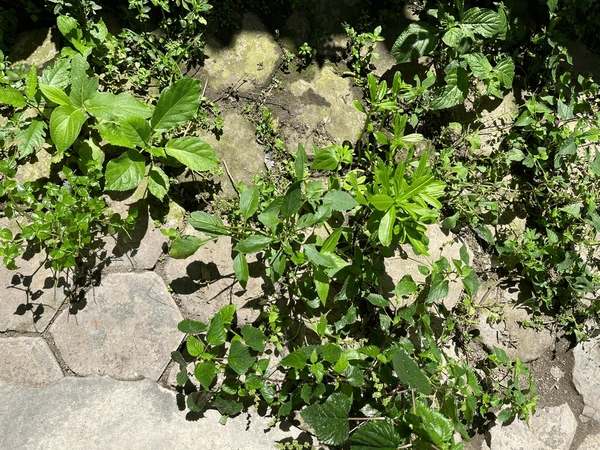
To a site team, “planting plans” sounds like an expensive hobby that ends up as a patch of weeds. At Monkey Business Design, we don’t look at plants as decoration; we look at them as functional site infrastructure.
If a tree isn’t providing shade to an outdoor classroom, or a hedge isn’t acting as a security boundary, it isn’t working hard enough for your budget.
Most school planting fails because it isn’t engineered for the high-energy reality of thirty students.
Key Takeaways
- Shade from a mature canopy reduces playground surface temperatures by up to 12°C. On a 30°C day, shaded tarmac stays safe; exposed tarmac becomes a burn hazard.
- Dense native hedging acts as a “living fence”, dampening road noise and providing a security barrier that’s far more resilient than wire mesh.
- 1 in 8 UK children have zero garden access at home. For these students, your school grounds are their only point of contact with the natural world.
- Protecting wildflower habitats with timber boardwalks allows students to study the ecosystem without compacting the soil or crushing the assets.
- Position hedges as windbreaks to protect timber and canvas canopies, extending the “all-weather” window of the site.
- Use “deadwood” logs as highways for invertebrates and non-prescriptive physical challenges for students.
- Prioritise native, hardy species that thrive in local mud without needing specialised pruning or chemical fertilisers.
Trees as Structural Anchors: The Thermal Advantage
A tree on a school site is a future thermal regulator. As summer temperatures rise, tarmac playgrounds become heat sinks.
According to the latest data, the shade from a mature canopy can lower ground surface temperatures by as much as 12°C compared to unshaded areas.
When we design a site, we plan for future utility. If you plant the right species now, like Oak, Lime, or Beech, you are creating the canopy for a future outdoor classroom or a large climbing tree section.
To protect this investment, any infrastructure built nearby must use galvanised metal feet. We don’t dig trenches that sever root systems; we build above them, ensuring the tree and the timber assets coexist for decades.
Hedges as “Soft Fencing”: The Logic of Living Boundaries
Security fencing is expensive and often makes a school feel like a correctional facility. A native hedge, comprising Hawthorn, Blackthorn, and Hazel, provides a “living fence” that is virtually impenetrable once established.
Strategically, these boundaries provide three functions that a wire mesh cannot:
- Acoustic Damping: Dense foliage reduces playground noise for neighbours.
- Zoning: Hedges create “rooms” in the playground, breaking up large, intimidating spaces into manageable zones for social interaction.
- Risk Education: Navigating a natural hedge involves managed risk—learning to respect thorns and density, which is far more educational than a flat wire fence.
Wildflowers: Managing the “Trample Risk”
The “wildflower meadow” is a common failure on school grounds. Usually, it’s a patch of grass left unmown that eventually gets trampled into mud.
To make wildflowers work in a school environment, they need intentional boundaries. By using simple logs or low-profile timber perimeters, you signal that this is an “observation zone.”
Integrating a timber boardwalk through the wildflowers allows a full class to walk into the habitat without destroying the very plants they are there to study. It turns a “weed patch” into a high-utility outdoor lab.
Why Schools Are the Front Line
A robust planting plan is a social necessity. As stated by Parliament UK, 1 in 8 children (12.5%) rely entirely on their school grounds for nature connection.
If your planting plan is a fenced-off “no-go” zone, you aren’t fulfilling that need. By using simple den-building materials, loose logs, and climbing trees within your planted zones, you allow students to interact with the land. This builds stewardship.
A child who builds a den next to a native hedge is a child who will value and protect that habitat for the rest of the year.
Reclaiming the School Estate
A planting plan shouldn’t be a list of flowers; it should be a strategy for how your school’s land functions. When you choose resilient, native species and protect them with solidly made infrastructure, you move from “maintaining a garden” to “managing a living asset.”
Ready to move from a “weed patch” to a living classroom?
Book a Site Assessment, we’ll walk the grounds with you and identify where a simple boardwalk or a strategic hedge could transform your site’s utility.
FAQs
Won’t wildflowers look messy during the winter?
They can, which is why we recommend “managed wildness.” By using timber perimeters, you signal that the long grass is a deliberate choice, not neglect.
How do we protect new saplings from running feet?
We use heavy-duty timber stakes and simple logs as physical barriers. This creates a “no-go” zone for feet without needing ugly plastic mesh.
Which trees are best for providing shade to play areas?
Broadleaf native trees like Oak, Lime, or Beech. They provide massive UV protection in summer but allow light through in winter once the leaves fall.
Are “stinging” plants like Hawthorn safe for primary schools?
Yes, if used as a boundary. Nature isn’t “bubble-wrapped.” Learning to respect a hedge is a basic risk-management skill for kids.
How do we plant without hitting underground services?
We review your site plans and drainage maps before we touch the soil. Where digging is risky, we focus on above-ground planters or no-dig boardwalks.