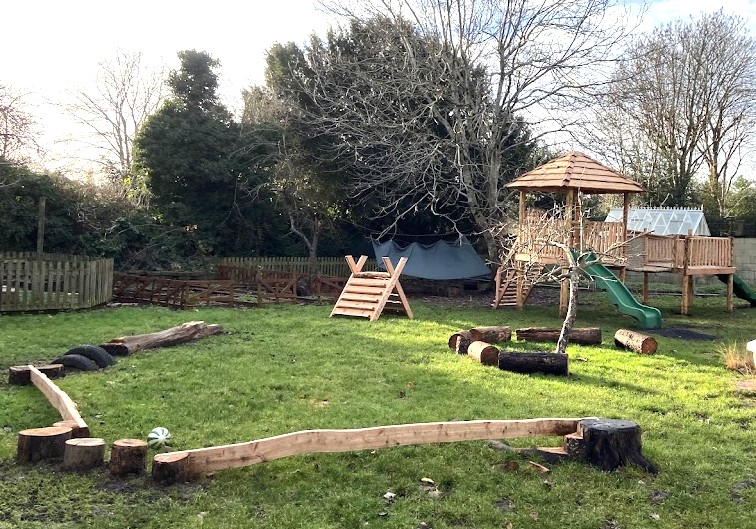
Deciding whether to patch up a failing play area or start again isn’t about aesthetics; it’s a structural integrity audit.
At Monkey Business Design, we don’t like waste. If we think a structure is worth saving, we’ll offer to reinforce it. If it’s a “sunk cost,” we’ll recommend you pull it down.
Most school sites are littered with pressure-treated softwood equipment that is effectively a sponge for groundwater.
While these catalogue kits look fine on day one, the reality of the UK climate means the “core” often begins to fail within 5 to 8 years. We engineer for a 20-year legacy, which means knowing the difference between a minor safety fix and a total structural failure.
Key Takeaways
- Identifying rotten wood: Distinguishing between tatty sapwood and rotten heartwood, shakes, and natural UV silvering.
- Renovating without a bulldozer: In an old school timber play area, we have added years by extracting tall sunken poles, cutting off the rotten timber portion, and re-fixing the remaining sound timber poles with galvanised metal feet. Similarly, for a roundhouse we’d built a decade earlier we amputated the post bases and set them on tailored stone pads.
- Nature-first climbing: Swapping prescriptive plastic frames for large climbing tree sections that fit the woodland setting.
- Managed Risk: Why “safe” but boring playgrounds actually lead to higher injury rates and worse behaviour.
- Dealing with Mud: Using boardwalks, pathways, and diversions to minimise mud.
Is It Structural Failure Or Just Surface Wear?
An easy mistake site managers can make is condemning a structure because it has a peeling or pockmarked surface, vertical cracks (called shakes), and a tired silver appearance.
The outer surface of the round pole is sapwood and is more susceptible to insect and fungal attack and rot. The inner heartwood is dense and much slower to decay. A round pole may look unsightly when the sapwood is compromised, but if the heartwood is still solid and has enough cross-section for the structural load, there may be years of life left in the structure. The sapwood can be peeled off, and the heartwood remains.
The cracks, called shakes, commonly occur in all timber subject to changes in humidity and temperature. If the cracks get so large that they may constitute a finger entrapment issue (1m+ above ground), then a good wood filler or expanding foam may help, but they are not usually a cause for replacement. There is a danger that deep cracks in softwood equipment allow water to penetrate the untreated centre. Testing with a probe and tap testing (listening) will help identify integrity.
Almost all timber will silver naturally as they react to UV light, and this has zero impact on the wood’s density or strength.
According to the Wood Protection Association (WPA), even the highest grade of pressure-treated softwood (Use Class 4) has an industry-standard service life of only 15 years in ideal conditions. In the waterlogged soil of a typical school field, life is often halved.
If you can push a screwdriver into the ground-contact posts, the structure is failing from the inside out. At this stage, “patching it up” is just throwing good money after bad wood.
Why Patching Up Softwood Is A Waste Of Your Budget
We often find schools trapped in a cycle of minor repairs. You replace a deck board this year, a railing next year, and then a support beam fails. This isn’t just a maintenance chore; it’s a drain on your capital expenditure.
National data from the Association of Play Industries (API) suggests that maintenance on low-grade structures can swallow 20% of the initial project budget within the first five years.
Compare that to a solidly made hardwood or composite build. Because we use Class 1 and 2 hardwoods and elevate structural posts on galvanised metal feet, the maintenance requirement drops to nearly zero in a decade.
You aren’t paying for the same playground twice every decade; you’re making a one-time investment in your school’s infrastructure.
Can You Renovate Without A Bulldozer?
Not every “failing” site needs to be levelled. Sometimes the skeleton is solid, but the play value has disappeared.
1. Canopies and Canvas
We can renovate an existing timber structure or offer a new shelter in timber or canvas.
These provide all-weather cover and give a tired site a “premium” feel that encourages pupils to stay active even in the rain.
2. Fire-Pit Hubs (Engineered for Smoke)
A fire-pit is the heart of Forest School, but it may be poorly designed. We build bespoke fire-pit shelters designed specifically to let the smoke out.
This turns a simple seating circle into a permanent outdoor classroom where teachers can actually talk to their pupils without being choked by woodsmoke.
3. Large Climbing Tree Sections
Plastic climbing frames are prescriptive; they tell a child exactly where to put their hands and feet.
We supply large climbing tree sections (raw, bark-stripped trunks) that provide a varied, non-prescriptive physical challenge. They are solidly made, naturally durable, and look like they belong in the woods.
4. Den Building and Loose Parts
Sometimes the best renovation is to give the site back to the kids. We supply simple den-building materials and simple logs or trunks that allow children to “engineer” their own space. This encourages teamwork and risk literacy far better than any fixed “playhouse”.
Why Is “Boring” Equipment A Liability?
School leaders are often worried about the liability of natural play, but “boring” equipment is often more dangerous.
When a structure tells a child exactly where to put their hands and feet, they get bored. And bored children start using equipment in “unintended” ways, climbing up the slide or jumping from the roof. This is where the 40,000 playground-related A&E visits recorded by RoSPA annually actually stem from.
By shifting to non-prescriptive features like climbing trees and den-building materials, you aren’t removing risk; you’re making it intentional. When pupils are engaged in “engineering” a shelter or navigating a complex trunk, they have less time for the friction and conflict common on bare tarmac.
This culture shift is why 73% of schools in the Learning through Landscapes survey reported a direct improvement in student behaviour after upgrading their outdoor spaces. It’s a move from “supervising behaviour” to “facilitating discovery.”
The Difference: Repair vs. Replace Triage
| Indicator | Stop & Repair | Pull it Down & Replace |
| Material | Timber showing vertical cracks (shakes) & silvering. | Timber with deep “checking” or core rot. |
| Ground Interface | Post on a metal foot / solid concrete. | Timber directly in wet soil / spongy feel. |
| Safety Report | Minor wear (loose fixings, worn ropes). | Structural failure or BS EN 1176 non-compliance. |
| Maintenance | Use stainless fixings and durable timber | Poor design and inferior materials |
| Educational Value | Children are still engaged and challenged. | Equipment is boring, prescriptive, or “too small.” |
Bridging The “Nature Gap” On Your Site
For many children, school grounds are the only natural spaces they visit. The 2024 Children’s People and Nature Survey (Natural England) notes that 91% of children say nature makes them happy, yet for 29% of them, school is the primary place where they access it.
A renovation is an opportunity to bridge this gap. By adding benches and stools in any design or all-weather boardwalks, you ensure that nature-based learning is accessible to everyone, including pupils with limited mobility, 365 days a year.
We use localised “no-dig” floating or ground screw foundations to preserve the root protection zone (RPZ) of trees, building your new classroom right into the heart of the woods without killing the trees in the process.
Experience a Solid Infrastructure
Repairing a play area shouldn’t be a chore; it should be a strategic investment. If a structure is worth saving, we’ll help you reinforce it.
Not sure if your site is a liability?
Book a Site Assessment, and we’ll walk the grounds, give the timber a “poke,” and give you a straight-up assessment of what can be saved and what needs to go.
FAQs
How do we stop old wood from becoming slippery?
Try to sweep dirt off the timber and discourage damp or at least standing water. Unless you fancy jet washing or scrubbing the algae coat off your timber, we can often renovate old steps and platforms by installing resin-aggregate non-slip inserts.
Can we move the old equipment to a better location?
If the timber is high-quality (like Robinia), yes. We can often dismantle and relocate structures, upgrading them with galvanised feet and timber or canvas canopies during the move.
Are climbing trees “safe” according to BS EN 1176?
Yes. Every large climbing tree section we install is checked for “head entrapments” and “finger traps,” ensuring that while the challenge is natural, the engineering is 100% compliant.
What is the environmental impact of your builds?
We select locally sourced woods or French and Eastern European Oak and Robinia. They all act as long-term carbon storage. We have a prejudice against using cement products and doing any serious damage to the soil and flora.