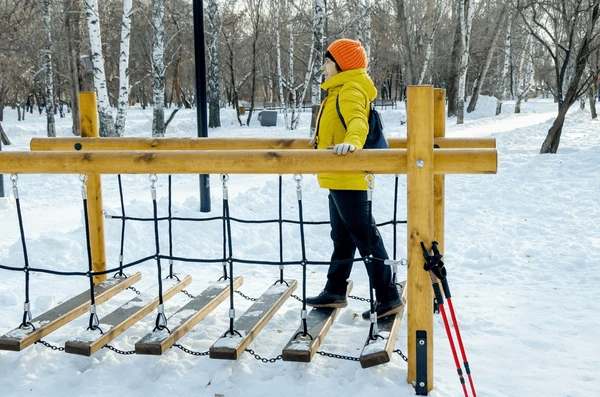
In the UK, “seasonal wear” is often used as a professional excuse for closing the playground from October to April.
For many schools, the first frost or the autumn rains mark the end of outdoor learning because the timber becomes a “skating rink” and the grass turns into a mud pit.
A school site that only works in the summer is a failed investment. Keeping a site safe year-round isn’t about a week of frantic maintenance every spring; it’s about engineering the infrastructure to handle environmental stressors.
When an area is cordoned off for “safety,” it typically indicates a failure in the original specification, rather than a fault in the weather. By shifting from “seasonal patches” to permanent, all-weather engineering, you reclaim the 30% of the school year currently lost to the climate.
5 Key Takeaways
- Slips and trips are the leading cause of non-fatal injuries in schools, accounting for 41% of all reported accidents.
- English schools face a £13.8 billion maintenance backlog; choosing high-maintenance materials is a direct drain on limited capital.
- Less than half of UK children (49.1%) meet daily activity targets; closing outdoor areas in winter exacerbates this health crisis.
- How galvanised metal feet prevent the ground-level rot that destroys standard softwood kits in wet soil.
- Why the natural grey “skin” on hardwoods is a structural defence, not a sign of decay.
Why Do Schools Lose Their Learning Space Every Winter?
The primary reason school grounds are closed in winter is the fear of slips and the destruction of the grass.
According to the Sport England Active Lives (2025/26) survey, only 49.1% of children meet the recommended 60 minutes of daily physical activity. When a school closes its “wild” areas or playground because of the weather, that percentage drops significantly, often impacting the most active students the hardest.
The “slippery timber” problem is almost always caused by biofilm (algae and moss) that grows on the surface of the wood in damp, shaded areas. It isn’t the wood that is the hazard; it’s the lack of integrated grip.
By engineering resin-aggregate non-slip inserts directly into the timber during the build, we provide a permanent, high-friction surface that stays safe in a wet February. This moves the site from a “seasonal extra” to a permanent teaching asset that never needs to be cordoned off for safety reasons.
Why Ground-Contact Timber Is A Liability
The most significant threat to school infrastructure is the “Mud-Line”, the point where timber meets damp soil. The National Audit Office (NAO) highlighted that the school estate maintenance backlog has reached £13.8 billion.
Schools can no longer afford to invest in “disposable” softwood equipment that rots in ground contact within 5–7 years.
Standard Pine is classified as “non-durable” in wet ground, acting as a sponge that draws moisture into the core. We solve this by elevating structural posts on galvanised metal feet. This creates a permanent air gap, preventing the “wicking” effect that rots timber from the inside out.
By using naturally rot-resistant hardwoods like Robinia or Oak, we ensure the structure remains a permanent school asset that survives decades of wet UK winters without adding to the maintenance debt.
Why Hardwoods Don’t “Fail” In The Summer
As the school estate moves into summer, the primary concern for many bursars is the “greying” of the wood. It is a common misconception that silver wood is drying out or needs chemical staining.
With Class 1 hardwoods, the silvering is a natural chemical reaction to UV light that creates a protective, hard-wearing “skin.” Unlike softwood, which requires annual chemical treatments to avoid becoming brittle and splintered, these hardwoods are maintenance-free.
Furthermore, natural timber has superior thermal performance. In a heatwave, plastic and metal playground equipment can reach surface temperatures that are unsafe for direct contact. Timber remains tactile and cool, allowing for year-round physical play regardless of temperature extremes. T
his is particularly relevant when using large climbing tree sections or timber amphitheatres, which remain usable and safe when metal frames are too hot to touch.
Reclaiming the January Curriculum: The engineering of comfort
To keep students engaged when it’s 2°C and raining, the infrastructure must provide more than just a place to sit; it has to provide shelter and warmth. This is where site-specific engineering proves its value over “off-the-shelf” kits.
By integrating quirky shelters in timber or canvas, you create a permanent dry zone for research and social interaction. Furthermore, a fire-pit shelter engineered to let the smoke out allows a full class to gather around a central heat source without the logistical chaos of a traditional, smoky campfire.
These tools allow the school to meet the Natural England target of keeping 91% of children happy in nature, regardless of the month. It turns the outdoor area into a functional classroom during the months when students would otherwise be confined to the hall.
Comparing the “Seasonal Patch” to the “Permanent Asset”
| Seasonal Threat | Standard Softwood Kit | Engineered Hardwood Asset |
| Wet/Ice (Slip) | Causes many accidents. | Integrated resin-aggregate grip. |
| Mud/Soil (Rot) | Rot-prone in <5 years in wet soil. | Galvanised feet break the rot cycle. |
| UV (Summer) | Splits and splinters without staining. | Natural silvering protects the core. |
| Maintenance | Adds to the £13.8bn backlog. | Maintenance-free structural integrity. |
| Site Utility | Areas cordoned off for 4 months/year. | 365-day access via boardwalks. |
Strategic Site Management
Keeping an outdoor area safe year-round isn’t about fighting the weather; it’s about building for it. If your site is currently cordoned off because of mud or “slippery wood,” you have an infrastructure problem, not a weather problem.
By investing in site-specific, engineered assets—from all-weather boardwalks that protect the soil to climbing trees that remain grippy in the frost—you ensure your school grounds remain a high-utility environment from January through to December.
Ready to reclaim your site this winter? Book a Site Assessment, we’ll walk your grounds in the rain, identify the “mud-traps,” and show you how a few engineered changes can keep your students outside all year round.
FAQs
How do we stop our timber amphitheatre from becoming a slip hazard?
Slippery surfaces are the leading cause of the 41% of school accidents. We solve this by integrating resin-aggregate inserts into the timber. This provides permanent, gritted friction that won’t wash away like “anti-slip” paint or require constant jet-washing.
Why do our softwood posts rot so quickly in the winter?
Untreated or pressure-treated Pine is often “non-durable” in ground contact. Continuous exposure to damp winter soil accelerates internal rot. We avoid this by using Class 1 hardwoods and galvanised metal feet to keep the timber dry.
Does the silvering of the wood in summer mean it’s failing?
No. For Oak and Robinia, silvering is a natural UV shield. It requires zero maintenance. Attempting to “stain” it is often a waste of the school’s limited capital maintenance budget.
How do we manage mud in high-traffic Forest School areas?
We recommend installing timber platforms elevated on metal feet. This allows the kids to build and play “above the mud,” preserving the soil health and preventing the area from being cordoned off due to “unsuitable conditions.”
Are canvas shelters durable enough for UK winter gales?
Yes, if they are engineered correctly. We use high-grade, UV-stabilised canvas and heavy-duty timber frames designed to handle UK wind loads, ensuring the space remains a permanent teaching asset year-round.