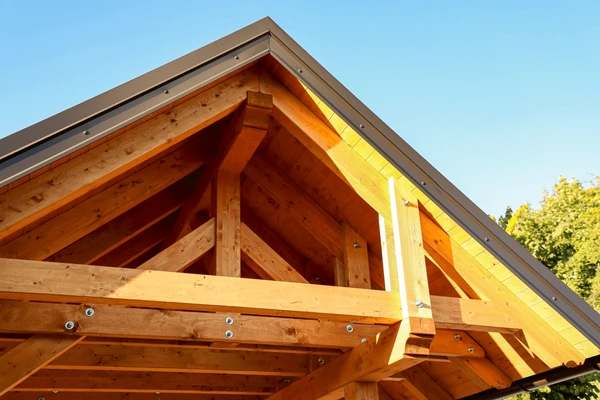
Designing timber structures for the UK’s damp climate requires a “site-first” engineering approach that prioritises moisture management.
To ensure a lifespan of 20 years or more, we use Class 1 and 2 hardwoods, such as Robinia and English Oak, which have natural rot resistance. We also elevate structural posts on galvanised metal feet to break the capillary action of groundwater.
Unlike standard “catalogue” equipment made of softwood, our builds use stainless steel fixings and resin-aggregate non-slip inserts to remain structurally sound and safe underfoot, even in the wettest conditions.
Key Takeaways
- The “Ground Contact” Rule: Standard pressure-treated softwood often fails prematurely in damp soil; hardwoods, such as Robinia, are the only viable choice for direct ground contact.
- Breaking the Rot Cycle: Using galvanised metal feet prevents “wicking,” where timber soaks up water from the ground like a sponge.
- Fixing Integrity: We use stainless steel or heavy-duty galvanised fixings because the natural tannins in Oak react with standard screws, leading to corrosion and structural weakness.
- Non-Slip Engineering: Standard grooved timber becomes lethal when wet; we specify resin-aggregate inserts that provide a high Slip Resistance Value (SRV) year-round.
- Managed Silvering: High-grade hardwoods don’t need toxic chemical stains; they “silver” naturally as UV light reacts with the wood’s surface.
Why “Off-the-Shelf” Softwood Fails in the UK
The most common mistake in school playground procurement is choosing “tanalised” softwood because it appears cheaper initially. Pressure treatment only offers surface-level protection for softwoods like Pine.
Once the wood “checks” (develops natural cracks), water penetrates the untreated core, and the rot begins from the inside out.
According to the Wood Protection Association (WPA), even the highest grade of pressure-treated softwood (Use Class 4) has an industry-standard Desired Service Life (DSL) of only 15 years in ground contact, and that is under ideal conditions. In the variable, often waterlogged soil of a UK school site, these softwoods frequently fail much sooner.
This is why we specify Robinia (Black Locust). Classified under BS EN 350-2 as Class 1 (Very Durable), Robinia has a natural service life of 25 to 30 years plus in direct soil contact, effectively doubling the value of the school’s initial investment without the need for toxic preservatives.
Material Choice: Why We Specify Class 1 And 2 Hardwoods
We don’t pick timber for its looks; we pick it for its natural durability rating.
- Robinia (Class 1): Robinia is often nicknamed the ‘steel of timber’ because it is naturally resistant to fungi and insects without needing chemical help. While common softwoods decay rapidly, Robinia is classified as “Very Durable,” meaning it remains structurally sound for at least 25 years in the harshest ground-contact environments.
- English Oak (Class 2): We use Oak heartwood for major structural beams. It provides the density and longevity needed for heavy-use bridges and platforms.
- Larch: A naturally resinous and durable option we often use for cladding and non-structural elements where we want to avoid chemical treatments.
Rot Prevention: Breaking the “Sponge” Effect
Timber rots when it stays wet. Our engineering focus is on moisture management:
- Galvanised Metal Feet: This is a non-negotiable for us. By elevating structural posts on metal feet, we create an air gap that prevents the wood from “wicking” moisture up from the mud.
- End-Grain Protection: We design joints and caps to ensure water doesn’t sit in the “straws” of the wood grain, which is where rot usually starts.
- Airflow Design: We ensure structures aren’t “boxed in,” allowing the timber to dry out naturally after a typical UK downpour.
Fixings & Hardware: The Difference is in the Detail
You can’t build a 20-year structure with standard wood screws. The high acidity of hardwoods like Oak requires specific metal grades.
- Stainless Steel vs. Zinc: Standard zinc screws will “bleed” black streaks onto Oak and eventually rust through. We specify stainless or heavy-duty galvanised fixings to ensure the skeleton of the structure stays as strong as the wood.
- Solidly Made Joinery: We don’t rely on glue or small fixings. We use traditional heavy-duty bolts and bespoke metal brackets to ensure every joint is rock-solid.
Technical Comparison: Softwood vs. Hardwood Engineering
| Feature | Softwood (Standard UC4) | Hardwood (Monkey Business) |
| Durability Class | Class 4 (Poor) | Class 1-2 (Excellent) |
| Ground Service Life | ~15 years (DSL) | 25–30 Years Plus |
| Treatment Required | Heavy chemicals (UC4) | Natural Resistance |
| Fixing Grade | Zinc / Low-grade Steel | Stainless / Galvanised Steel |
Designing for the Next Two Decades
Engineering for the UK weather isn’t about fighting nature; it’s about choosing the right materials to work with it. We don’t do “whoop-whoop” marketing claims; we just build things that don’t rot.
Want a site that lasts 20 years instead of five?
Book a Site Assessment, and we’ll walk your grounds and show you exactly how we engineer for longevity.
FAQs
How do you prevent children from slipping on wet timber?
We use resin-aggregate non-slip inserts in all high-traffic areas. This creates a permanent, gritty surface that maintains high grip year-round, regardless of rain or algae.
Won’t the wood rot in boggy ground?
No. We use Class 1 Robinia or Class 2 Oak heartwood, which have natural rot-resistant oils. We also use galvanised metal feet to keep the wood from soaking up groundwater.
Does the wood need to be stained or painted annually?
No. Our hardwoods require zero chemical stains, and it becomes silver naturally over time without losing structural strength, lasting 20 years plus.
What is the “no-dig” rule for tree protection?
We use a floating foundation with minimal-footprint metal feet. This prevents root damage and soil compaction, keeping your mature trees healthy.
Are bespoke builds more expensive than kits?
The upfront cost is higher, but the lifecycle value is better. Catalogue kits often fail in 7–10 years; our builds are engineered for a 20-year legacy.